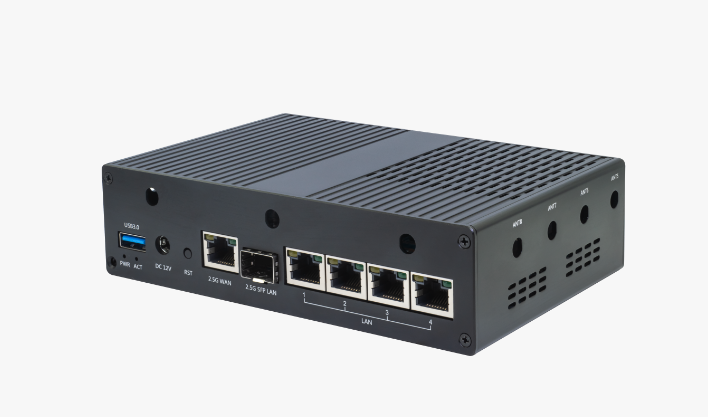
This adds support for the Airpi AP3000M 5G CPE based on MediaTek MT7981B.

Specifications:

SoC: MediaTek MT7981B (dual-core ARM Cortex-A53)
RAM: 1GB DDR4
Storage: 8GB or 16GB eMMC
Ethernet: 1x 2.5GbE LAN, 1x 1GbE WAN
Wireless: 2.4GHz/5GHz 802.11ax
Buttons: Reset, WPS
LEDs: System, 2.4GHz WiFi, 5GHz WiFi
Cooling: PWM-controlled fan
Expansion: M.2 slot for 5G modem

The factory partition (mmcblk0p2) is empty in stock firmware.
Execute via SSH before flashing OpenWrt:
```
dd if=/lib/firmware/MT7981_iPAiLNA_EEPROM.bin of=/dev/mmcblk0p2 bs=4k count=1
MAC addresses
```
Fixed MAC addresses are derived by macaddr_generate_from_mmc_cid.

Installation via U-Boot web page

Set static IP 192.168.88.2/255.255.255.0 on your computer.
Connect to the 1GbE port (WAN) and hold the reset button while booting the device. Wait for about 6 seconds, and release the reset button.
Open U-boot web page on your browser at http://192.168.88.1
Select the OpenWRT sysupgrade image, upload it, and start the upgrade.
Wait for automatic reboot.
Installation via sysupgrade

Flash the sysupgrade file via LuCI upgrade page without saving the settings.

Signed-off-by: Fil Dunsky <filipp.dunsky@gmail.com>
Link: https://github.com/openwrt/openwrt/pull/21397
Signed-off-by: Hauke Mehrtens <hauke@hauke-m.de>
Recent Cudy WR3000H v1 units have a Motorcomm YT8821 2.5G PHY for
the WAN interface instead of the RTL8221B PHY used in earlier units,
so add kmod-phy-motorcomm to be able to use it.

Signed-off-by: Andrew MacIntyre <andymac@pcug.org.au>
[linuxtardis@gmail.com: slightly reworded the commit description]
Signed-off-by: Jakub Vaněk <linuxtardis@gmail.com>
Link: https://github.com/openwrt/openwrt/pull/21399
Signed-off-by: Hauke Mehrtens <hauke@hauke-m.de>
- adopted MTD partition size increase from 64M to 128M
  -> this allows boot to complete
- moved MAC addressing stuff out of partition definitions
- all MAC addressing stuff is in .dtsi

Specifications:

SoC: MediaTek MT7981B
RAM: 256MiB
Flash: Winbond SPI-NAND 128 MiB
Switch: 1 WAN, 3 LAN (Gigabit) MediaTek MT7531
Buttons: Reset, Mesh
Power: DC 12V 1A
WiFi: MT7981B 2.4Ghz & 5.8Ghz

Led Layout from bottom to top:

    Power
    Mesh (RGB Led, user controllable, default set to OpenWrt Status)
    WLAN 2 GHz (user controllable)
    WAN (user controllable)
    LAN3
    LAN2
    LAN1
    WLAN 5 GHz (Not on front panel but blinks through enclosure,
               user controllable)

Buttons:

    Reset
    Mesh (user controllable, no default function)

Installation:

A. Through U-Boot menu:

 -  Prepare your connecting computer to use a static IP in
	network 192.168.1.0/24
 -  Power down the router and hold in the Reset button.
 -  While holding in the button power up the router again.
 -  Hold the button in for 10 seconds and then release.
 -  Use your browser to go to 192.168.1.1
 -  If you see a GUI allowing for flashing firmware then
	you got the right model.
 -  Upload the sysupgrade file.

Note: Recovery GUI can be used to recover from an incorrect
      firmware flash.

B. Through OpenWrt Dashboard:

    If your router comes with OpenWrt preinstalled
	(modified by the seller), you can easily upgrade
	by going to the dashboard (192.168.1.1) and then
	navigate to System -> Backup/Flash firmware,
	then flash the firmware

MAC Addresses were found in Factory partition:

offset 0x4 F8:5E:3C:xx:xx:aa --> Router Label -2
offset 0xa F8:5E:3C:xx:xx:bb --> Router Label -1
offset 0x24 F8:5E:3C:xx:xx:cc --> Router Label +1
offset 0x2a F8:5E:3C:xx:xx:yy --> printed on Router Label

Signed-off-by: Jörg Seitz <github.joeterminal@xoxy.net>
Link: https://github.com/openwrt/openwrt/pull/19823
Signed-off-by: Hauke Mehrtens <hauke@hauke-m.de>
This commit adds support for the Cudy AP3000 Wall v1.

SoC: MediaTek MT7981b
RAM: 256MiB
Flash: spi-nand spi0.0: 128 MiB
Wifi: MediaTek MT7981 2x2 DBDC 802.11ax 2T2R (2.4 / 5)
LEDs: 1 LED in two colors (red & white)
Buttons: 1 reset, 1 led on/off
Ethernet: 5x 1GbE
Power: PoE powered (standalone)

The stock firmware is a customized variant of OpenWrt, which implements
a signature check that only allows flashing official firmware. Cudy offers
intermediate OpenWrt firmware images on their website [1][2] which do not
implement the signature check. After flashing the intermediate image the
upstream official OpenWrt image can be installed.

The stock firmware can be recovered via TFTP using the U-Boot based boot
loader[3]. Set up a TFTP server on your computer with IP 192.168.1.88/24
serving the stock firmware from Cudy's website renamed to "recovery.bin".
Press and hold the reset button while powering on the device, wait for the
TFTP server to send the recovery.bin file, then release the reset button.
The router will take a couple of minutes to reboot and set up the stock
firmware.

[1] https://www.cudy.com/blogs/faq/openwrt-software-download
[2] https://drive.google.com/drive/folders/1BKVarlwlNxf7uJUtRhuMGUqeCa5KpMnj
[3] https://www.cudy.com/en-us/blogs/faq/how-to-recovery-the-cudy-router-from-openwrt-firmware-to-cudy-official-firmware

Signed-off-by: Derek Denk <derek.denk@live.com>
Link: https://github.com/openwrt/openwrt/pull/21266
Signed-off-by: Hauke Mehrtens <hauke@hauke-m.de>
The SUPPORTED_DEVICES sets for both Maxlinear (v1) and Airoha (v2)
devices were identical, so sysupgrade was unable to detect when an
incorrect image was being installed.  This caused "soft bricking" of
devices when a v1 image was installed on a v2 device, and vice versa.

Fix this by making the supported_devices distinct for each device
version, by renaming the devices with a version-specific name.
This is reflected in the file name and the image metadata.

Fixes: https://github.com/openwrt/openwrt/issues/20566
Fixes: https://github.com/openwrt/asu/issues/1525
Signed-off-by: Eric Fahlgren <ericfahlgren@gmail.com>
Link: https://github.com/openwrt/openwrt/pull/20632
Signed-off-by: Hauke Mehrtens <hauke@hauke-m.de>
This allows us to use the full size of nand,
which extends ubi size from 64Mb to 122.25Mb.

If you are at factory firmware, please refer
to [PR](https://github.com/openwrt/openwrt/pull/21141)
to boot into OpenWrt first.

1. Log in to the device and backup all the partitions,
especially unique `Factory` and `bdata` partitions
from System -> Backup / Flash Firmware -> Save mtdblock contents.
2. Install kmod-mtd-rw to unlock mtd partitions for writing:
```bash
apk update && apk add kmod-mtd-rw && insmod mtd-rw i_want_a_brick=1
```
3. Write new OpenWrt (U-Boot Layout) `BL2` and `FIP`:
```bash
mtd write openwrt-mediatek-filogic-cudy_wbr3000uax-v1-ubootmod-preloader.bin BL2
mtd write openwrt-mediatek-filogic-cudy_wbr3000uax-v1-ubootmod-bl31-uboot.fip FIP
```
4. Set static IP on your PC: `192.168.1.254`, gateway `192.168.1.1`
5. Serve openwrt-mediatek-filogic-cudy_wbr3000uax-v1-ubootmod-initramfs-recovery.itb
using TFTP server.
6. Connect Router LAN with PC LAN.
7. Cut off the power and re-engage, wait for TFTP recovery to complete.
8. After OpenWrt initramfs recovery has booted,
clean `/dev/mtd5` ubi partition to utilize maximum of free space & create ubootenvs:
```bash
ubidetach -p /dev/mtd5; ubiformat /dev/mtd5 -y; ubiattach -p /dev/mtd5
ubimkvol /dev/ubi0 -n 0 -N ubootenv -s 128KiB
ubimkvol /dev/ubi0 -n 1 -N ubootenv2 -s 128KiB
```
4. Perform sysupgrade.

Tested-by: 4pda users
Signed-off-by: Fil Dunsky <filipp.dunsky@gmail.com>
Link: https://github.com/openwrt/openwrt/pull/21225
Signed-off-by: Hauke Mehrtens <hauke@hauke-m.de>
Another OEM variation of a Cudy WR3000 series device made for Russian market.

Hardware:
 - SoC: MediaTek MT7981B
 - CPU: 2x 1.3 GHz Cortex-A53
 - Flash: 128 MiB GigaDevice SPI NAND. Flash Model: F50L1G41LB, ID: C801
 - RAM: DDR3, 512 MiB
 - WLAN: 2.4 GHz, 5 GHz (MediaTek MT7976CN, 802.11ax)
 - 1x WAN MT7531 (JXD 2531Z) 10/100/1000 Mbps
 - 4x LAN 2x MT7530 (JXD 2529S) 10/100/1000 Mbps
 - USB 3.0 port
 - Buttons: Reset, WPS
 - 8x LEDs: 2x Red, 6x Blue
 - Serial console: no need to solder, just open the case and unskrew the radiator, TX-RX, RX-TX, GND-GND, VCC do not connect, 115200 8n1
 - Power: 12 VDC, 1.5 A

+---------+-------------------+-----------+
|         | MAC               | Algorithm |
+---------+-------------------+-----------+
| WAN     | 80:AF:CA:xx:xx:x1 | label+1   |
| LAN     | 80:AF:CA:xx:xx:x0 | label     |
| WLAN 2g | 80:AF:CA:xx:xx:x0 | label     |
| WLAN 5g | 82:AF:CA:xx:xx:x1 | label+1   |
+---------+-------------------+-----------+

Based on a factory layout with only 64mb partition for easier transition from factory to OpenWrt for users if the "intermediate" RSA signed firmware will be provided by Cudy.

**Installation**
The installation must be done via UART & TFTP by disassembling the router. On other occasions Cudy has distributed intermediate firmware and dts to make installation easier, but since this router is OEM special WB order for local RU market there is a possibility they will not provide it.

**Install using UART & TFTP**
1. Connect to UART.
2. Since the factory BL is locked and the boot process can not be stopped, you have to use mtkuartboot, hold reset, engage the power, boot into your payloaded bl2 & fip.
3. Connect to LAN and set your IP to 192.168.1.254.
4. Configure a TFTP server to serve openwrt-mediatek-filogic-cudy_wbr3000uax-v1-initramfs-kernel.bin file.
5. Run these steps in u-boot using the name of your file:

```
setenv bootfile openwrt-mediatek-filogic-cudy_wbr3000uax-v1-initramfs-kernel.bin
setenv ipaddr 192.168.1.1
setenv serverip 192.168.1.254
tftpboot
bootm
```

6. Router will boot into OpenWrt initramfs recovery, just open your browser `192.168.1.1` and sysupgrade with the `Keep settings` option turned off.

Tested-by: many 4pda users
Signed-off-by: Fil Dunsky <filipp.dunsky@gmail.com>
Link: https://github.com/openwrt/openwrt/pull/21225
Signed-off-by: Hauke Mehrtens <hauke@hauke-m.de>
Since there are many similar devices from Cudy (TR3000 / WR3000E / WR3000P / WR3000S / WBR3000UAX) this will allow to create OpenWrt U-Boot layout for all of them using same DDR3 target.

Tested-by: 4pda users
Signed-off-by: Fil Dunsky <filipp.dunsky@gmail.com>
Link: https://github.com/openwrt/openwrt/pull/21225
Signed-off-by: Hauke Mehrtens <hauke@hauke-m.de>
Hardware is identical to WRC-X3200GST3.
- SoC: MediaTek MT7622
- RAM: 512MB
- Flash: 128MB SPI-NAND

The -W suffix in the retail name (WRC-G01-W) denotes the casing color
and is omitted from the model name in the OpenWrt configuration to
maintain consistency with other Elecom devices.

Signed-off-by: Yuhei Amemiya <minihui@me.com>
Link: https://github.com/openwrt/openwrt/pull/21238
Signed-off-by: Hauke Mehrtens <hauke@hauke-m.de>
Include XHCI USB drivers on the Cudy WR3000P v1 router, the drivers are
required to be able to use the USB port for USD devices.

Closes: https://github.com/openwrt/openwrt/issues/21231
Fixes: 04e9d154f2 ("mediatek: filogic: add support for Cudy WR3000P v1")
Signed-off-by: Dmitry Mostovoy <dmitry.mostovoy@ceifx.com>
Link: https://github.com/openwrt/openwrt/pull/21281
Signed-off-by: Hauke Mehrtens <hauke@hauke-m.de>
ASUS RT-AX57M, RT-AX54HP V2, RT-AX1800HP V2, RT-AX1800S V2, and RT-AX3000S all use the same firmware and have identical hardware

Hardware
--------
SOC: MediaTek MT7981b
RAM: 256MB DDR3L (Winbond W632GU6NB-09)
FLASH: 128MB SPI-NAND (Winbond W25N01KVZEIR)
WIFI: Mediatek MT7981b + Mediatek MT7976DAN 802.11ax 2.4/5 GHz
ETH: MediaTek MT7531AE Switch
UART: 3V3 115200 8N1 (Pinout silkscreened / Do not connect VCC)

MAC addresses
-------------
LAN	Label MAC (stored in mtd ubi Factory partition at offset 0x4)
WAN	LAN
2.4G	LAN + 2 in first octet
5G	LAN

Installation
-----------------------------------------------------------
Vendor-UI Method
-----------------------------------------------------------
1. Download the OpenWrt initramfs.trx image.

2. Connect the PC via LAN to one of the yellow router ports and wait
   until your PC to get a DHCP lease.

3. Browse to http://192.168.1.1 (or whatever your router IP is configured as)

4. If your router is brand new, finish the setup process and log into
   the Web-UI.

5. Navigate to Administration -> Firmware Upgrade and upload the
   downloaded OpenWrt initramfs.trx image.

6. Wait for OpenWrt to boot. Open the default OpenWrt IP in a web browser and perform a system upgrade using the sysupgrade image as instructed in the top banner.

---------------------------------------------------------------------------
Revert to stock firmware:
1: Install package facinstall -> https://forum.openwrt.org/t/facinstall-package-for-easy-installation-factory-images/177587
2. Install Asus stock trx image via OpenWRT LuCI interface.

Signed-off-by: Garrett Mesmer <garrettmesm@gmail.com>
Co-authored-by: Oleg S <remittor@gmail.com>
Signed-off-by: Oleg S <remittor@gmail.com>
Link: https://github.com/openwrt/openwrt/pull/20491
Signed-off-by: Hauke Mehrtens <hauke@hauke-m.de>
Usually we do not use MHz to describe the DDR transmission rate. In
fact, the clock frequency of the DDR3-1866 is only 933 MHz. MT/s is
a more commonly used unit.

Signed-off-by: Shiji Yang <yangshiji66@outlook.com>
Hardware specification:
  SoC: MediaTek MT7981B
  Flash: ESMT F50L1G41LB 128MB
  RAM: ESMT M15T2G16128A DDR3 256MB
  Ethernet: 3x 1G
  Button: Reset, WPS

MAC addresses
  LAN:	Label MAC (stored in Factory partition offset 0x1fef20)
  WAN:	LAN + 1
  WiFi:	LAN

Official LED layout, from left to right:
  [power] [internet] [wps] [wifi] [lan3/2/1] [wan]

Redefinition for OpenWrt:
  [power]: used for led-boot, led-failsafe, and led-running
  [internet]: used for WAN RX/TX indication
  [wps]: used for led-upgrade
  [wifi] and [lan3/2/1]: unchanged
  [wan]: used for WAN link indication

Installing OpenWrt:
  - Setup a tftp server on your PC. Copy
    xxx-preloader.bin, xxx-bl31-uboot.fip and
    xxx-initramfs.itb to tftp root directory.
  - Connect to the router via ssh or telnet,
    username: useradmin, password is the web
    login password of the router.
  - Backup all critical flash partitions with
    the following commands where x.x.x.x is
    the IP of your PC.

    IP=x.x.x.x
    cd /dev
    for d in /sys/class/mtd/mtd?; do
      if [ "$(cat $d/name)" = "BL2" ]; then
        tftp -l $(basename $d) -r bl2.img -p $IP
      elif [ "$(cat $d/name)" = "FIP" ]; then
        tftp -l $(basename $d) -r fip.bin -p $IP
      elif [ "$(cat $d/name)" = "Factory" ]; then
        tftp -l $(basename $d) -r factory.bin -p $IP
      fi
    done
    for d in /sys/devices/virtual/ubi/ubi0/ubi0_*; do
      [ "$(cat $d/name)" != "customer" ] && continue
      tftp -l $(basename $d) -r customer -p $IP
      break
    done

  - Flash with the following commands:

     cd /tmp
     tftp -r xxx-preloader.bin -g x.x.x.x
     tftp -r xxx-bl31-uboot.fip -g x.x.x.x
     mtd write xxx-preloader.bin spi0.0
     mtd write xxx-bl31-uboot.fip FIP
     mtd erase ubi

  - Set a static ip(192.168.1.254) for your PC.
    And then reboot the router. It will run
    initramfs image automatically.
  - After openwrt boots up, perform sysupgrade
    via web UI.

Reverting to the vendor firmware:
  - Setup a tftp server on your PC with ip
    address 192.168.1.254. And make sure
    bl2.img, fip.bin, factory.bin and customer
    are located in tftp root directory.
  - Power off the router.
  - Press and hold WPS key, then power on
    the router.
  - Release WPS key, when internet/wifi/wps
    leds are blinking.
  - Wait until internet/wifi/wps leds light
    up, power off the router.
  - Press and hold reset key, power up the
    router, release reset key 15s later.
  - Connect to http://192.168.1.1, now you
    can upload vendor .bin firmware.

Uboot netconsole:
  Uboot netconsole can be enabled by WPS
  or reset key.

  - Setup a linux PC with ip 192.168.1.254.
    Open a new terminal and execute
    'stty -isig -echo cbreak; nc -lup 6666'
  - Press and hold WPS(or reset) key, then
    power on the router.
  - Release key once internet/wifi/wps leds
    are all on.
    NOTE: don't hold the key more than 5s
    after internet/wifi/wps leds on, or it
    will try to revert to vendor firmware.
  - 5s later, uboot bootmenu will show on
    the terminal.

Signed-off-by: Zhiwei Cao <bfdeh@126.com>
Link: https://github.com/openwrt/openwrt/pull/18631
Signed-off-by: Hauke Mehrtens <hauke@hauke-m.de>
This commit replaces the 7-8 spaces with 1 tab to modify the indentation appropriately.

Signed-off-by: Brian Lee <larte332@gmail.com>
Link: https://github.com/openwrt/openwrt/pull/21018
Signed-off-by: Hauke Mehrtens <hauke@hauke-m.de>
Kebidumei AX3000-U22 is one of many clones of the same range extender
that can be found on Aliexpress or other Chinese portals.

The easiest way to identify this model is by searching for "AX3000
Repeater" and picking the device that looks like mine [0].

Specification:
- SoC:     MediaTek MT7981B (1.3 GHz)
- RAM:     256 MB
- Flash:   16 MB SPI NOR
- Ports:   1 x 1 GbE
- Antenna: 6 (2 fake)
- WiFi:    MediaTek dual-band WiFi 6
  - 2.4 GHz: b/g/n/ax, MIMO 2x2
  - 5 GHz:   a/n/ac/ax, MIMO 2x2
- Buttons: Reset & WPS
- LEDs:    Ethernet (green), Status (red, green, blue)
- Power:   110–240 V AC (internal PSU, board uses 12 V DC)
- Serial:  unmarked connector on PCB
           [1: Vcc, 2: RX, 3: TX, 4: GND]

Install via OEM web UI:
1. Use reset button to perform factory reset.
2. Connect PC to LAN port and obtain DHCP address.
3. Upload the sysupgrade image via OEM firmware upgrade page,
   e.g. http://192.168.18.1/upgrade.html
4. After reboot, hold reset button to clear leftover vendor config.

Install via serial:
1. Connect serial console (115200 8N1).
2. Enter the console.
3. Backup mtd4 partition if you want to restore OEM FW later.
4. Download image.
5. Run 'sysupgrade -n'.

Revert to stock:
1. Run sysupgrade without keeping config using mtd4 backup.

[0] https://openwrt.org/_media/media/kebidumei_ax3000-u22.png

Signed-off-by: Pawel Dembicki <paweldembicki@gmail.com>
Link: https://github.com/openwrt/openwrt/pull/20287
Signed-off-by: Hauke Mehrtens <hauke@hauke-m.de>
This commit adds support for Keenetic KN-1812/Netcraze NC-1812

Device specification
--------------------
SoC Type:   MediaTek MT7988D, Cortex-A73, 64-bit
RAM:        1024MB DDR4 Micron MT40A512M16TB-062E:R
Flash:      SPI NAND Winbond W25N02KV (256 MiB)
Ethernet:   4x1GbE (internal MT7988 built-in) + 2.5GbE (internal MT7988 phy) + 10GbE (RTL8261BE)

WLAN:       MT7992AV
WLAN 2g:    MediaTek MT7975N, b/g/n/ax/be, MIMO 4x4
WLAN 5g:    MediaTek MT7977B, a/n/ac/ax/be, MIMO 4x4
LEDs:       5 LEDs, 1 power green, 1 internet green,
            2x fn green, 1 wlan green, gpio-controlled
Button:     4 (Reset, WPS, FN1, FN2)
USB port:   Yes, 1xUSB3.2 and 1xUSB2.0 (via GL850G)
Power:      12 VDC, 3 A

Notes:
 * The device supports dual boot mode
 * Fn2 led reassigned to wlan 2.4

Flash instruction:
The only way to flash OpenWrt image is to use tftp recovery mode in U-Boot:

1. Configure PC with static IP 192.168.1.2/24 and tftp server.
2. a) Keenetic
      Rename "openwrt-mediatek-filogic-keenetic_kn-1812-squashfs-factory.bin"
      to "KN-1812_recovery.bin" and place it in tftp server directory.
   b) Netcraze
      Rename "openwrt-mediatek-filogic-netcraze_nc-1812-squashfs-factory.bin"
      to "NC-1812_recovery.bin" and place it in tftp server directory.
3. Connect PC with ethernet port, press the reset button, power up
   the device and keep button pressed until status led start blinking.
4. Device will download file from server, write it to flash and reboot.

Signed-off-by: Maxim Anisimov <maxim.anisimov.ua@gmail.com>
Link: https://github.com/openwrt/openwrt/pull/20737
Signed-off-by: Hauke Mehrtens <hauke@hauke-m.de>
This AX3000 flying saucer-shaped device is sold under a few names:
- Widelantech WAP430X
  http://www.widelantech.com/?m=home&c=View&a=index&aid=131
- Felicomm
- UeeVii UAP200 (sold on amazon.com)
True name, as marked on the PCB and as appears in the DTS, is WAP430X.

Hardware:
- SoC: Mediatek MT7981B
- RAM: 256MiB DDR3
- ROM: 16MiB NOR flash (Winbond 25Q128JVSQ)
- Wired: one GbE RJ45 port
- Wireless: Mediatek MT7976CN DBDC
- Antennas: Internal (two 2.4 GHz 4.5 dBi, three 5 GHz 6 dBi)
- GPIO: two blue LEDs (status, WLAN), one button (reset)
- Power: DC5521 (12V) or 802.3af PoE (48V 0.3A)
- UART: J500 on PCB [3v3] (Rx) (Tx) (Gnd), 115200n

Original firmware is GECOOS 8.0_2024081000, a fork of OpenWrt 21.02
created by Widelantech. All ports are closed except 443 (web management
interface) and 80 (redirects to 443). UART is locked down, but U-Boot
bootloader is friendly.

Installation is done via UART (see note below).

Method 1: press any key during boot to enter MTK U-Boot bootloader,
then choose option 2 (Upgrade firmware) and upload sysupgrade binary
via TFTP (or via Xmodem).

Method 2: put sysupgrade binary on a webserver (http, not https); after
GECOOS loads, choose option 4 (固件在线升级 = online firmware upgrade)
in the menu and enter the URL to the sysupgrade binary.

Note: GECOOS has a slick web management, and firmware can be uploaded
at https://6.6.6.6/#/system/sysupgrade but it's still not clear how to
convert the sysupgrade binary to a factory binary accepted by the web
interface (WIP).

Signed-off-by: Rani Hod <rani.hod@gmail.com>
Link: https://github.com/openwrt/openwrt/pull/20402
Signed-off-by: Hauke Mehrtens <hauke@hauke-m.de>
ASUS TUF-AX4200Q(TUF 小旋风Pro WiFi6 AX4200) is a home router that adds an additional 2.5G Ethernet port to ASUS TUF-AX4200.

Hardware
- - - - - - - -
- SOC   : MediaTek MT7986
- RAM   : 512MB DDR3
- FLASH : 256MB SPI-NAND (Winbond W25N02KV)
- WIFI  : Mediatek MT7986 DBDC 802.11ax 2.4/5 GHz
- ETH   : MediaTek MT7531 Switch
          MaxLinear GPY211C 2.5 N-Base-T PHY (WAN)
          MaxLinear GPY211C 2.5 N-Base-T PHY (LAN)
- UART  : 3V3 115200 8N1 (Pinout silkscreened / Do not ocnnect VCC)

Installation
- - - - - - - -
Vendor-UI Method:

1. Download or make the OpenWrt initramfs.trx image
2. Connect the PC via LAN to one of the yellow router ports and wait until your PC to get a DHCP lease.
3. Browse to http://192.168.50.1/
4. If your router is brand new, finish the setup process and log into the Web-UI.
5. Navigate to Administration -> Firmware Upgrade and upload the downloaded OpenWrt image.
6. Wait for OpenWrt to boot. Transfer the sysupgrade image to the device using SCP and install using sysupgrade.

   $ sysupgrade -n <path-to-sysupgrade.bin>

TFTP Method:

1. Download the OpenWrt initramfs image.
   Copy the image to a TFTP server reachable at 192.168.1.70/24.
   Rename the image to tufax4200q.bin.

2. Connect the PC with TFTP server to the TUF-AX4200Q.
   Set a static ip on the ethernet interface of your PC.
   (IP address: 192.168.1.70, subnet mask: 255.255.255.0)
   Connect to the serial console,
   interrupt the autoboot process by pressing '4' when prompted.

3. Download & Boot the OpenWrt initramfs image.

   $ setenv ipaddr 192.168.1.1
   $ setenv serverip 192.168.1.70
   $ tftpboot 0x46000000 tufax4200q.bin
   $ bootm 0x46000000

4. Wait for OpenWrt to boot.
   Transfer the sysupgrade image to the device using SCP and install using sysupgrade.

   $ sysupgrade -n <path-to-sysupgrade.bin>

(based on support for ASUS RT-AX52 by achterin and trx image generation by remittor)

Signed-off-by: Brian Lee <larte332@gmail.com>
Link: https://github.com/openwrt/openwrt/pull/20900
Signed-off-by: Hauke Mehrtens <hauke@hauke-m.de>
Drop all kernel 6.6 patches, hacks, backports and configuration support,
and remove the CONFIG_LINUX_6_6 guarded conditional in filogic.mk.

Signed-off-by: Mieczyslaw Nalewaj <namiltd@yahoo.com>
Link: https://github.com/openwrt/openwrt/pull/20943
Signed-off-by: Christian Marangi <ansuelsmth@gmail.com>
Devices package:
  Add missing USB3 driver

Device tree:
  Fix model name and pwm usage
  Add missing supply for I2C and USB
  Update network port names based on the shell image [1]

[1] https://docs.banana-pi.org/bpi-r4_lite/banana_pi_bpi-r4_lite_case_1.png

Fixes: 8b6c6978 ("mediatek: add support for BananaPi BPi-R4 Lite")
Signed-off-by: Chukun Pan <amadeus@jmu.edu.cn>
The initramfs.trx image can be flashed from the web interface of factory
firmware.

Unfortunately, the default boot command of the bootloader does not load
the ramdisk in the FIT image. This means that the image can only be
built when the option TARGET_ROOTFS_INITRAMFS_SEPARATE is disabled.

Tested with firmware 3.0.0.4.388_33965 (U-Boot 2022.10 / 2.0.0.5).

Signed-off-by: Jan Hoffmann <jan@3e8.eu>
Link: https://github.com/openwrt/openwrt/pull/20841
Signed-off-by: Hauke Mehrtens <hauke@hauke-m.de>
Hardware
--------

SOC:   MediaTek MT7981
RAM:   512MB DDR4
FLASH: 128MB SPI-NAND
WIFI:  Mediatek MT7915 (integrated) 2x2 802.11ax 2.4 / 5 GHz
ETH:   Mediatek MT7981 internal 1 GbE PHY
UART:  3V3 115200 8N1 (Pinout silkscreened / Do not connect VCC)

Installation
------------

1. Download the OpenWrt initramfs image. Copy the image to a TFTP server
2. Connect the TFTP server to the EAX17. Conect to the serial console,
   interrupt the autoboot process by pressing '0' when prompted.
3. Download & Boot the OpenWrt initramfs image.

   $ tftpboot openwrt.bin
   $ bootm

4. Wait for OpenWrt to boot. Transfer the sysupgrade image to the device
   using scp and install using sysupgrade.

   $ sysupgrade -n <path-to-sysupgrade.bin>

Signed-off-by: Jascha Sundaresan <flizarthanon@gmail.com>
Link: https://github.com/openwrt/openwrt/pull/20354
Signed-off-by: Hauke Mehrtens <hauke@hauke-m.de>
Product name: Wavlink WL-WN536AX6 Rev a "Mighty LX2"
Product link: https://www.wavlink.com/en_us/product/WL-WN536AX6.html

Specifications:
SOC: MT7986AV
RAM: 512MB DDR4
Flash: 128MB SPI NAND
Ports: 4 LAN (1G) & 1 WAN (2.5G)
WIFI: MT7976PN + MT7975N
LEDs: 8 (STATUS, WIFI, WAN, LAN1, LAN2, LAN3, LAN4, PWR)
USB: 1 (3.0)

MAC table, same as stock firmware:
LAN: 80:3F:5D:xx:xx:x1 partition "hw" at 0x44e (ASCII)
WAN: 80:3F:5D:xx:xx:x2 partition "hw" at 0x460 (ASCII)
2G: 80:3F:5D:xx:xx:x3
5G: 80:3F:5D:xx:xx:x4

* Installation with OEM WebUI:

Note: Make sure PC is connected on LAN1 port. The OEM firmware has an unknown root password and settings are kept after upgrading firmware. Therefore, a customized Openwrt firmware is needed to remove the root password on login, by adding `passwd -d root` to /etc/init.d/bootcount. The WebUI does a filename check so the customized firmware is named accordingly.

1. Download modified firmware file `WAVLINK_WN536AX6-A_M36AX6_V250320-WO-437baca-modified.bin` from https://github.com/ses1er/firmware-misc/tree/main/wavlink/wl-wn536ax6a
2. Log into WebUI on default IP: http://192.168.20.1
3. Browse to More (top menu) -> System -> Firmware Upgrade.
4. Under `Local Upgrade` section, check the device to be upgraded and upload downloaded modified firmware. Click `UPLOAD FILE`, then `APPLY`
5. Wait about 2 minutes (ignore progress bar), and browse to http://192.168.20.1. You should see LUCI login page. Username is root and no password.
6. Browse to `System -> Backup/Flash Firmware`, click on `Flash Image`, click `Browse` and locate `openwrt-mediatek-filogic-wavlink_wl-wn536ax6-a-squashfs-sysupgrade.bin` file.
7. Uncheck `Keep settings and retain the current configuration` and click `Continue`.
8. Router will now be set to IP 192.168.1.1 which is the Openwrt default.

* Installation with UART:

Note: Having UART connected while cold booting the device will result in a kernel panic when initializing wifi. I've found this workaround:
1. Power off the device and ensure UART is not connected to PC.
2. Power up the device, when lights come on, plug in UART.
3. Warm boots and soft restarts will not cause kernel panic for the duration of device being powered on. Repeat steps for subsequent cold boots.

1. Configure TFTP server with IP 192.168.1.66. Copy `openwrt-mediatek-filogic-wavlink_wl-wn536ax6a-initramfs.itb` to TFTP root.
2. Interrupt boot by pressing 0.
3. Run the following in Uboot console: `setenv serverip 192.168.1.66; setenv ipaddr 192.168.1.1; tftpboot 0x46000000 openwrt-mediatek-filogic-wavlink_wl-wn536ax6-a-initramfs.itb; bootm`
4. Transfer `openwrt-mediatek-filogic-wavlink_wl-wn536ax6-a-squashfs-sysupgrade.bin` to device:
   (`scp -O openwrt-mediatek-filogic-wavlink_wl-wn536ax6-a-squashfs-sysupgrade.bin root@192.168.1.1:/tmp/`)
5. Run the following on device: `sysupgrade -n /tmp/openwrt-mediatek-filogic-wavlink_wl-wn536ax6-a-squashfs-sysupgrade.bin`

Signed-off-by: Qing W. <ses1er@gmail.com>
Tested-by: Martin Blumenstingl <martin.blumenstingl@googlemail.com>
Link: https://github.com/openwrt/openwrt/pull/20760
Signed-off-by: Hauke Mehrtens <hauke@hauke-m.de>
This board is also as known as LC-HX3001

Hardware specification:
  SoC: MediaTek MT7981B 2x A53
  Flash: Foresee F35SQA001G 128 MB SPI-NAND
  RAM: 256MB DDR3
  Ethernet: 4x 10/100/1000 Mbps
  Switch: MediaTek MT7531AE
  WiFi: MediaTek MT7976C
  Button: Reset, Mesh
  Power: DC 12V 1A

Gain SSH access:
Method 1:
1. Connect UART Adapter to the router
2. UART pins are enabled, set the root password with passwd command
   start the dropbear instance on port 22

Method 2:
1. Login into web interface, and restore the router with SSH enabled configuration.
2. After reboot Default Web interface password will be 12345678
   SSH password is empty

Flash instructions:
1. Connect to HX21, backup everything, especially 'Factory' part.
3. Write new FIP:
   mtd write openwrt-mediatek-filogic-hx_21-bl31-uboot.fip FIP
4. Set static IP on your PC:
   IP 192.168.1.254/24, GW 192.168.1.1
5. Serve OpenWrt initramfs image using TFTP server.
6. Wait for TFTP recovery to complete.
7. After OpenWrt has booted, perform sysupgrade.
8. To write new BL2
   Install mtd-rw
   opkg update && opkg install kmod-mtd-rw
   insmod mtd-rw i_want_a_brick=1
   mtd write openwrt-mediatek-filogic-imou_hx21-preloader.bin bl2

Signed-off-by: Jahidul Islam <hello@jahid.io>
Link: https://github.com/openwrt/openwrt/pull/20753
Signed-off-by: Hauke Mehrtens <hauke@hauke-m.de>
According to the factory uboot and firmware[1], the ubi size is set
to 512 MiB (0x20000000) and it exceeds the size of the flash, after
that the uboot and kernel resizes it to 114.5 MiB (0x7280000) instead
of 114.125 MiB (0x7220000). The mismatch of the ubi size causes
kernel fails to read ubi volumes and throws panic.

Trim whitespaces while at it.

1. https://github.com/immortalwrt/immortalwrt/issues/2123#issuecomment-3523744128

Fixes: c908fc7d95 ("mediatek: add support for Zbtlink ZBT-Z8102AX v2")
Signed-off-by: Tianling Shen <cnsztl@immortalwrt.org>
Link: https://github.com/openwrt/openwrt/pull/20769
Signed-off-by: Hauke Mehrtens <hauke@hauke-m.de>
Specification
-------------
- SoC       : MediaTek MT7981BA dual-core ARM Cortex-A53 1.3GHz
- RAM       : DDR3 256Mbytes, ESMT M15T2G16128A
- Flash     : 128Mbytes NAND Flash, ESMT F50L1G41LB
- WLAN      : MediaTek MT7976CN dual-band Wi-Fi 6
  - 2.4GHz  : b/g/n/ax, MU-MIMO
  - 5GHz    : a/n/ac/ax, MU-MIMO
- Ethernet  : MediaTek MT7531AE
  - LAN     : 10/100/1000 Mbps x4
  - WAN     : 10/100/1000 Mbps x1
- UART      : 1x4 pin header hole on PCB
  - 3.3V, RX, GND, TX (115200, 8N1)
- Buttons   : WPS, Reset
- LEDs      : 1x CPU (Amber/Blue)
              1x Wi-Fi (Amber/Blue)
              1x WAN activity (Amber/Blue)
              4x LAN activity (Amber/Blue)
- Power     : 12VDC, 1A (Center positive polarity)

Note: The LED color is amber or blue, depending on your router's color
(black/white).

MAC address
-----------
+-----------+-------------------+-----------+
| Interface | MAC               | Algorithm |
+-----------+-------------------+-----------+
| WLAN 2.4G | B0:38:6C:xx:xx:xx | label     |
| WLAN 5G   | B2:38:6C:4x:xx:xx |           |
| WAN       | B0:38:6C:xx:xx:xx | label + 1 |
| LAN       | B0:38:6C:xx:xx:xx | label + 3 |
+-----------+-------------------+-----------+
The WLAN 2.4G MAC address was found in 'Factory' partition, 0x4

Installation
------------
1. Download the OEM recovery software (ipTIME Firmware Wizard (11ac))
   from the manufacturer's website
2. Download the *squashfs-factory.bin file from the OpenWrt website
3. Press a reset button, and power up the router (keep pressing the reset button)
4. Wait more than 10 seconds until the CPU LED stop blinking
5. Connect the router (LAN port) to the PC
6. Run the OEM recovery software and follow the instructions
7. Select the *squashfs-factory.bin file during the router recovery process
8. Wait for the router to boot from *squashfs-factory.bin

Limitation: Triggering the WLAN LED for activity on both phy0 (2.4GHz) and phy1 (5GHz)
----------
Currently, the UCI doesn't support triggering a single LED for activity
on multiple WLAN interfaces. As a temporary workaround, the LED is
configured to only indicate activity on `phy1`. If you wish to monitor
`phy0` instead, you must change the device from `phy1-ap0` to `phy0-ap0`
in the LuCI LED configuration.

Signed-off-by: Donghyun Ko <nyankosoftware@gmail.com>
Link: https://github.com/openwrt/openwrt/pull/20771
Signed-off-by: Hauke Mehrtens <hauke@hauke-m.de>
Teltonika RUTC50 has a 5G modem. Install uqmi by default to control the
modem with the default package set.

Signed-off-by: David Bauer <mail@david-bauer.net>
Add mt7987-2p5g-phy-firmware to DEVICES_PACKAGES of the MT7987A RFB as
well as the BananaPi R4 Lite.

Signed-off-by: Daniel Golle <daniel@makrotopia.org>
This commit adds support for TP-LINK BE450.

Device specification
--------------------
SoC Type:   MediaTek MT7988D, Cortex-A73, 64-bit
RAM:        512MB
Flash:      SPI NAND GigaDevice (128 MiB)
Ethernet:   MediaTek MT7531AE (3 Ports) + 2.5GbE (internal MT7988 phy) + 10GbE (RTL8261N)

WLAN:       MT7992
WLAN 2g:    MediaTek MT7975N, b/g/n/ax/be, MIMO 4x4
WLAN 5g:    MediaTek MT7979N, a/n/ac/ax/be, MIMO 4x4
LEDs:       8 LEDs, 1 status blue, 2x WIFI blue, 2x Internet
	        blue/orange, 1 LAN blue, 1 usb blue, 1 wps blue, gpio-controlled
Button:     2 (Reset, WPS)
USB port:   Yes
Power:      12 VDC, 2 A
Connector:  Barrel
Bootloader: Main U-Boot - U-Boot 2023.10-rc4. Additionally, ubi0
            partition contain "seconduboot" (also U-Boot 2023.10-rc4)

Serial console (UART), unpopulated, located near the power connector
---------------------
heatsink
|   |
|   |
|   |     +----+-----+------+-------+               +-----------------+
|   |     | TX |  RX |  GND | +3.3V |               | power connector |
+---+     +----+-----+------+-------+               +-----------------+
                                  |
                Don't connect ----+

Disassemble: rm the 2 screws at the bottom and the one at the backside.
             un-clip the case starting at the edge above the LEDs.

Installation (UART)
-------------------
1. Place OpenWrt initramfs image on tftp server with IP 192.168.1.2
2. Attach UART, switch on the router and interrupt the boot process by
   pressing 'Ctrl-C'
3. Load and run OpenWrt initramfs image:
      tftpboot 0x50000000 openwrt-mediatek-filogic-tplink_be450-initramfs-kernel.bin && bootm 0x50000000
4. Run 'sysupgrade -n' with the sysupgrade OpenWrt image

Note: the 10GbE (RTL8261N) is only working if reverting this Realtek target specific commit:
      b77fa45d12

      The second ubi partition (ubi1) is empty and there is no known
      dual-partition mechanism, neither in u-boot nor in the stock firmware.

      NMBM is not used.

Not Working: WED, if activated, MT7992 isn't recognized any more.

Signed-off-by: Dirk Buchwalder <buchwalder@posteo.de>
Link: https://github.com/openwrt/openwrt/pull/20398
Signed-off-by: Hauke Mehrtens <hauke@hauke-m.de>
Also the MT7987 RFB accidentally already set the not-yet-existing
mt798x-2p5g-phy-firmware-internal package as one of the DEVICE_PACKAGES.
This currently breaks the build, so remove it for now. Also remove stray
'blkid' package from DEVICE_PACKAGES which was accidentally copied from
MediaTek's SDK.

Fixes: 9de7189ed4 ("mediatek: build image for MT7987 RFB")
Signed-off-by: Daniel Golle <daniel@makrotopia.org>
Because the firmware has not yet been accepted in linux-firmware we
cannot yet package mt7987-2p5g-phy-firmware-internal. Remove it from
DEVICE_PACKAGES of the BPi-R4-mini until the an upcoming linux-firmware
release will come with this firmware included, allowing us to then
create that package.

Fixes: 8b6c6978d6 ("mediatek: add support for BananaPi BPi-R4 Lite")
Signed-off-by: Daniel Golle <daniel@makrotopia.org>
The BPi-R4 Lite is a WiFi-7 router board based on the MT7987 SoC.

Specification :
 - SOC: Mediatek MT7987A (4x Cortex-A53
 - RAM: 2GB
 - Flash: 32MB SPI NOR, 256MB SPI NAND, 8GB eMMC
 - Switch: MediaTek MT7531AE
 - Ports : 4x LAN (1G), 1x SFP (via MT7531), 1x WAN (2.5G)
 - Buttons : Reset & WPS/Mesh
 - LEDs : Status (PWM), SFP
 - USB: on-board VIA VL817 USB3.1/USB2.0 hub
    * 1 - mPCIe B (SIM3)
    * 2 - NGFF-KEYB (SIM1)
    * 3 - USB-A connector
    * 4 - mPCIe A (SIM4)
 - mPCIe: 1x 8GT/s x2 or 2x 8GT/s x1 (configurable via bootloader)
 - RTC: PCF8563
 - mikroBUS socket with SPI, I2C and full UART
 - on-board HT42B534 USB-to-serial for Type-C console port
 - Power: USB Type-C PD 20V, or DC via barrel connector or JST-VH 3.96

Installation:
Uncompress *sdcard.img.gz and write to microSD card, eg. using 'dd'.
Use bootloader menu on the serial console to install SPI-NAND or SPI-NOR,
once installed to SPI-NAND you can use the bootloader menu to install to
eMMC. See instructions for BananaPi R3 for details.

Signed-off-by: Daniel Golle <daniel@makrotopia.org>
Import and clean DT and DT-overlay files from MediaTek's SDK to build
an image with various DT-overlays for the MT7987 reference board.

Signed-off-by: Daniel Golle <daniel@makrotopia.org>
This board is also as known as E-Life ETR631-T/ETR635-U.

Hardware specification:
  SoC: MediaTek MT7981B 2x A53
  Flash: 128 MB SPI-NAND
  RAM: 256MB DDR3
  Ethernet: 4x 10/100/1000 Mbps
  Switch: MediaTek MT7531AE
  WiFi: MediaTek MT7976C
  Button: Reset, Mesh
  Power: DC 12V 1A

Gain telnet access:
1. Login into web interface, and download the configuration.
2. Uncompress the configuration:
     * Enter fakeroot if you are not login as root.
   tar -zxf <filename>.tar.gz
3. Edit 'etc/passwd', remove root password: 'root::1:0:99999:7:::'.
4. Edit 'etc/rc.local', insert telnetd command before 'exit 0':
   ( sleep 3s; telnetd; ) &
5. Repack the configuration:
   tar -zcf backup.tar.gz etc/
6. Upload new configuration via web interface, now you can connect to
   KOMI A31 via telnet.

Flash instructions:
1. Connect to KOMI A31, backup everything, especially 'Factory' part.
2. Write new BL2:
   mtd write openwrt-mediatek-filogic-konka_komi-a31-preloader.bin BL2
3. Write new FIP:
   mtd write openwrt-mediatek-filogic-konka_komi-a31-bl31-uboot.fip FIP
4. Set static IP on your PC:
   IP 192.168.1.254/24, GW 192.168.1.1
5. Serve OpenWrt initramfs image using TFTP server.
6. Cut off the power and re-engage, wait for TFTP recovery to complete.
7. After OpenWrt has booted, perform sysupgrade.

Signed-off-by: Tianling Shen <cnsztl@immortalwrt.org>
Link: https://github.com/openwrt/openwrt/pull/20357
Signed-off-by: Hauke Mehrtens <hauke@hauke-m.de>
The imagebuilder is not intended to build initramfs images.  Some
profiles attempt to do this and succeed, due to buildroot leaking
the initramfs-kernel into staging_dir; others attempt it, but fail
due to not having initramfs binaries present in the imagebuilder.

Fix this by adding an explict guard around the unsupported generation
of the initramfs images.  This saves space and time during imagebuilder
runs, fixes those that are currently broken and protects against future
breakage for profiles that inadvertently work now.

Fixes: https://github.com/openwrt/openwrt/issues/20151
Signed-off-by: Eric Fahlgren <ericfahlgren@gmail.com>
Link: https://github.com/openwrt/openwrt/pull/20347
Signed-off-by: Robert Marko <robimarko@gmail.com>
This commit fixes stability issues on certain RAX3000Me devices. Some
devices has DDR3 RAM which don't able to work reliably at 2133 MHz
and require special BL2 (1866 MHz RAM freq).

Fixes: https://github.com/openwrt/openwrt/issues/20046
Signed-off-by: Mikhail Zhilkin <csharper2005@gmail.com>
Link: https://github.com/openwrt/openwrt/pull/20059
Signed-off-by: Hauke Mehrtens <hauke@hauke-m.de>
This commit adds support for Buffalo WSR-6000AX8 and AX8P models.

Hardware
--------
SOC:       MediaTek MT7986B
RAM:       512MB
FLASH:     128MB SPI-NAND (Winbond)
WIFI 2.4G: (Embedded in SOC) b/g/n/ax, MIMO 4x4
WIFI 5G:   (Embedded in SOC) a/n/ac/ax, MIMO 4x4
ETHERNET:  2.5GbE MaxLinear GPY211C (eth1: WAN)
ETHERNET:  MediaTek MT7531AE 3xGbE (eth0: LAN1, LAN2, LAN3)
UART:      3.3V 115200 8N1

Serial(UART) Pin Layout
-----------------------

   +-------+-------+-------+-------+
J4 |  RX   |  TX   |  GND  |(3.3V) |
   +-------+-------+-------+-------+
           (Bottom Side)

MAC Address Table
-----------------
lan1-3:    board_data 0x4(text)
eth1/WAN:  board_data 0x4(text)
WIFI 2.4G: lan1 + 2
WIFI 5G:   lan1 + 9

Installation
------------

1. Set up a TFTP server with the IP address "192.168.11.2".

2. Rename the OpenWrt initramfs image to "linux.ubi-recovery" and place it
   in the TFTP server's root directory.
3. While holding down the AOSS button, power on the WSR-6000AX8 (or AX8P).

4. The device will automatically download the initramfs image
   from the TFTP server and boot into it.
5. Once booted, run "sysupgrade -n" using the OpenWrt sysupgrade image
   to complete the installation.

Recovery
--------

1. Decrypt the official firmware image using "buffalo-enc".

   example:
   $ buffalo-enc -d -i wsr_6000ax8_jp_100 -o wsr_6000ax8_jp_100.dec \
     -l -O 0xc8

2. Run "sysupgrade -F -n" with the decrypted image.

Signed-off-by: Shin Sato <shin.sugar.ssyysy2021@gmail.com>
Link: https://github.com/openwrt/openwrt/pull/13107
Signed-off-by: Hauke Mehrtens <hauke@hauke-m.de>
Specification :
- SOC : Mediatek MT7981B (1.3GHz)
- RAM : 256MB
- Flash : 16MB SPI NOR
- Ports : 4 LAN (1G) & 1 WAN (1G)
- WIFI : MediaTek dual-band WiFi 6
  - 2.4 GHz : b/g/n/ax, MIMO 2x2
  - 5 GHz   : a/n/ac/ax, MIMO 2x2
- Buttons : Reset & WPS/Mesh
- LEDS : WAN (Green), Status (Red & Blue)
- Power : 12V1A

Install via OEM web ui:
Upload the sysupgrade image to firmware upgrade page on OEM web ui

Install via recovery / revert to stock firmware:
1. Unplug from power
2. Download the Sysupgrade (for openwrt installation) or OEM Factory image (for revert to stock firmware)
3. Set your computer ethernet IP to 192.168.1.X, subnet 255.255.255.0 (X=your chosen ip number ranging from 2-254)
4. Press and hold reset button while turn on / plug power adapter to the router. Wait untill ALL LAN green LED turn on, then release the reset button.
5. Plug the LAN cable from your computer into LAN 1 port then open web browser, and type in the address column : 192.168.1.1
6. Upload the sysupgrade / oem factory image
7. Wait until the router finished flashing (the router will reboot)
8. Set ethernet ip to dhcp
9. Open 192.168.1.1 (for openwrt install) / 192.168.0.1 (for OEM firmware)

Signed-off-by: Ari Kurniawan <noobhek@gmail.com>
Link: https://github.com/openwrt/openwrt/pull/20035
Signed-off-by: Hauke Mehrtens <hauke@hauke-m.de>