mirror of
https://github.com/steve-m/hsdaoh-rp2350.git
synced 2025-12-09 23:34:39 +01:00

71 lines
4.7 KiB
Markdown
71 lines
4.7 KiB
Markdown
# hsdaoh-rp2350 - High Speed Data Acquisition over HDMI
|
|
## Stream up to 175 MByte/s from your Raspberry Pi Pico2 to your PC
|
|
|
|
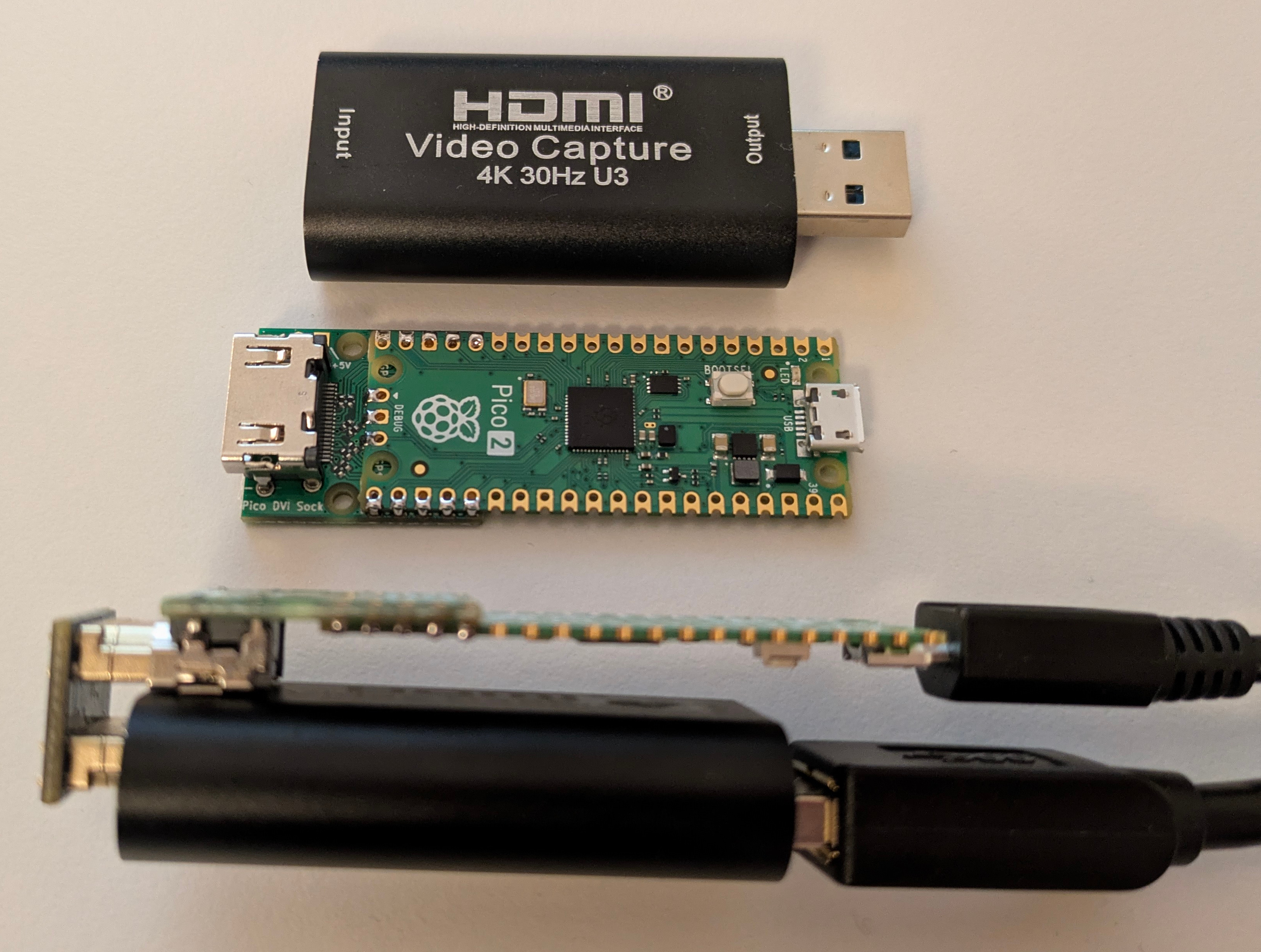
Using $5 USB3 HDMI capture sticks based on the MacroSilicon MS2130, this project allows to stream out up to 175 MByte/s of real time data from an RP2350 (with overclocking) to a host computer with USB3.
|
|
For more information and the host library, see the [main repository](https://github.com/steve-m/hsdaoh) and the [talk at OsmoDevcon '24](https://media.ccc.de/v/osmodevcon2024-200-low-cost-high-speed-data-acquisition-over-hdmi).
|
|
|
|
|
|
|
|
## Building
|
|
|
|
Make sure you have the latest version of the [pico-sdk](https://github.com/raspberrypi/pico-sdk) installed together with an appropriate compiler. You should be able to build the [pico-examples](https://github.com/raspberrypi/pico-examples).
|
|
|
|
To build hsdaoh-rp2350:
|
|
|
|
git clone https://github.com/steve-m/hsdaoh-rp2350.git
|
|
mkdir hsdaoh-rp2350/build
|
|
cd hsdaoh-rp2350/build
|
|
export PICO_SDK_PATH=/<path-to>/pico-sdk
|
|
cmake -DPICO_PLATFORM=rp2350 -DPICO_BOARD=pico2 ../
|
|
make -j 8
|
|
|
|
After the build succeeds you can copy the resulting *.uf2 file of the application you want to run to the board.
|
|
|
|
Apart from the Pico2 with the [Pico-DVI-Sock](https://github.com/Wren6991/Pico-DVI-Sock), it also should work with the Adafruit Feather RP2350 with HSTX Port, but so far only the Pico2 was tested.
|
|
|
|
## Example applications
|
|
|
|
The repository contains a library - libpicohsdaoh - which implements the main functionality. It reads the data from a ringbuffer, and streams it out via the HSTX port.
|
|
In addition to that, the apps folder contains a couple of example applications:
|
|
|
|
### counter
|
|
|
|
This application uses the PIO to generate a 16-bit counter value which is written to a DMA ringbuffer, which is then streamed out via hsdaoh. The counter can be verified using the hsdaoh_test host application.
|
|
|
|
### logic_analyzer
|
|
|
|
Sample 16 GPIOs with the PIO and transfer the data, can be used as a 16 bit @ 32 MHz logic analyzer, or be adapted to 8 bit @ 64 MHz and so on.
|
|
The IOs used for input are GP0-11, GP20-22 and GP26.
|
|
|
|
### internal_adc
|
|
|
|
The data from the internal ADC is streamed out via USB. Default configuration is overclocking the ADC to 3.33 MS/s. Using the USB PLL and overvolting beyond VREG_VOLTAGE_MAX, up to 7.9 MS/s can be achieved.
|
|
|
|
### external_adc
|
|
|
|
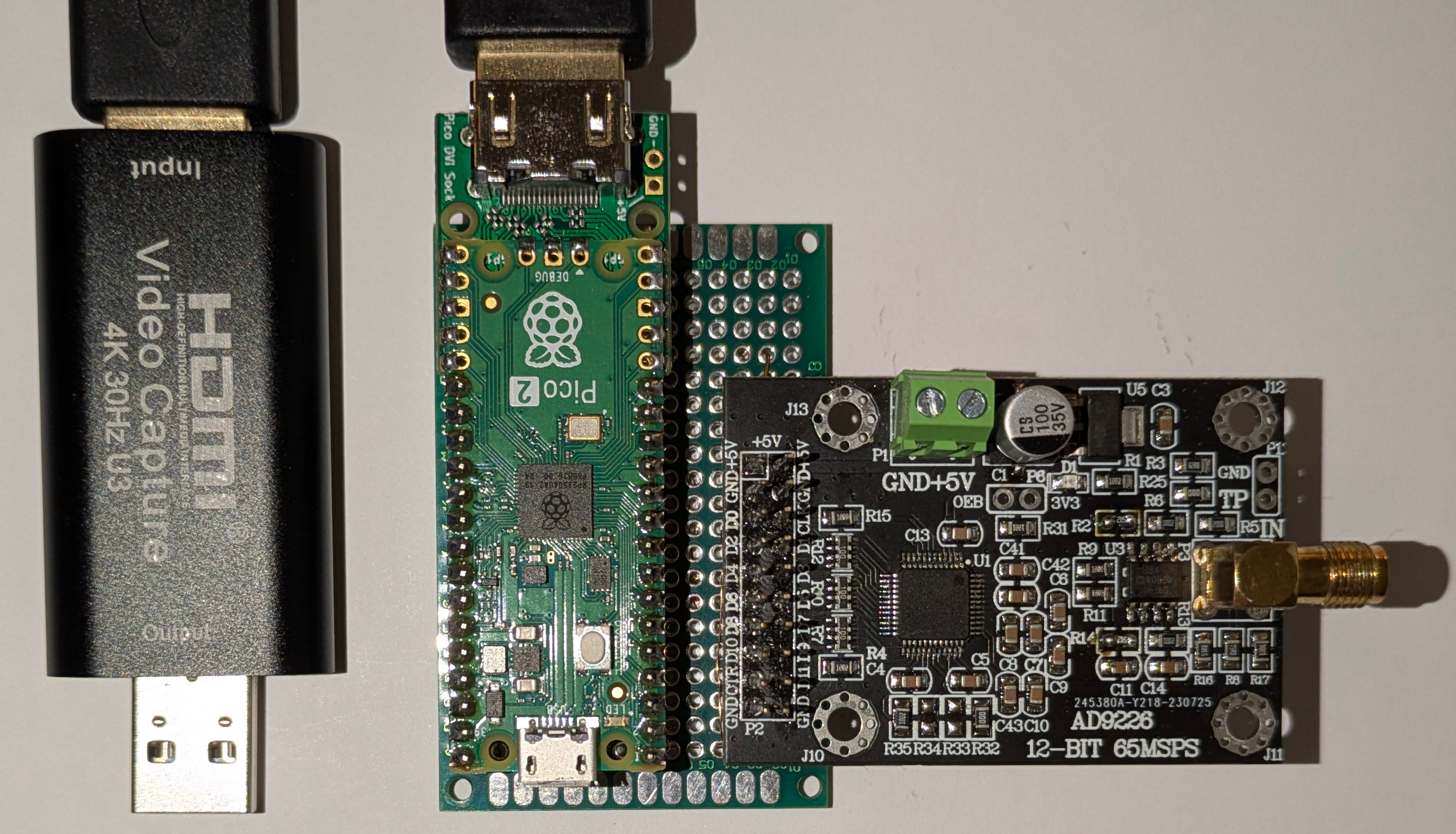
This app contains a PIO program that reads the data from a 12-bit ADC connected to GP0-GP11, outputs the ADC clock on GP20, and packs the 12-bit samples to 16-bit words to achieve maximum throughput.
|
|
It is meant to be used with cheap AD9226 ADC boards. The default setting is overclocking the RP2350 to 160 MHz and driving the ADC with a 40 MHz clock. With higher overclocking up to 96 MHz ADC clock can be used.
|
|
|
|
This can be used for sampling the IF of a tuner/downcoverter, as a direct-sampling HF SDR, or for capturing a video signal e.g. with [vhsdecode](https://github.com/oyvindln/vhs-decode).
|
|
For the vhsdecode use-case, there is also an [adapter PCB](https://github.com/Sev5000/Pico2_12bitADC_PCMAudio). It also supports sampling a PCM1802 audio ADC board.
|
|
|
|
|
|
|
|
### external_dualchan_adc
|
|
|
|
Similar to the external_adc app, but samples a AD9238 dual channel 12-bit ADC connected to GP0-GP11, with clock for both channels on GP20. The benefit of using the AD9238 is that only 12 data lines are required to transfer the data DDR-style, so it works with a regular RP2350A/Pico2 board.
|
|
|
|
### dual_external_adc
|
|
|
|
Also similar to the external_adc app, but samples two 12-bit ADCs connected to a RP2350B, as well as two PCM1802 modules. Intended for use with vhs-decode, see [this PCB](https://github.com/Sev5000/RP2350B_DualADC_DualPCM) for the matching hardware.
|
|
This example needs to be built with an RP2350B-board in order to work correctly:
|
|
|
|
cmake -DPICO_PLATFORM=rp2350 -DPICO_BOARD=solderparty_rp2350_stamp_xl ../
|
|
|
|
### sdr
|
|
|
|
This app can be used for attaching the [hsdaohSDR prototype](https://github.com/steve-m/hsdaohSDR) to an RP2350B instead of the Tang nano 20K FPGA board. Contains PIO code for packing the 2x 10 bit AD9218 data, and also implements a USB UART to I2C bridge for controlling the tuner. Like the dual_external_adc, it also needs to be built with a RP2350B board.
|
|
|
|
## Credits
|
|
|
|
hsdaoh-rp2350 is developed by Steve Markgraf, and is based on the [dvi_out_hstx_encoder](https://github.com/raspberrypi/pico-examples/tree/master/hstx/dvi_out_hstx_encoder) example, and code by Shuichi Takano [implementing the HDMI data island encoding](https://github.com/shuichitakano/pico_lib/blob/master/dvi/data_packet.cpp), required to send HDMI info frames.
|